Where expedition cruises go
- Antarctica: most voyages sail from Ushuaia in Argentina across the Drake Passage to the Antarctic Peninsula. Some fly over the Drake to save time.
- The Arctic: Svalbard, Greenland, Iceland and Arctic Canada, with chances to see polar bears, walruses and seabirds.
- The Galápagos: small ships visiting islands with unique wildlife under Ecuador’s national park rules.
- Other regions: Australia’s Kimberley coast, the Amazon and remote Pacific islands.
When to go
Antarctica voyages run during the southern summer, roughly November to March. Early season has pristine snow, mid-season brings penguin chicks, and late season is often good for whales. Arctic voyages run in the northern summer, roughly June to September. The Galápagos can be visited all year, with different wildlife highlights by season.
What to expect on an expedition cruise
- Small ships with ice-strengthened hulls, often carrying a team of naturalists and guides.
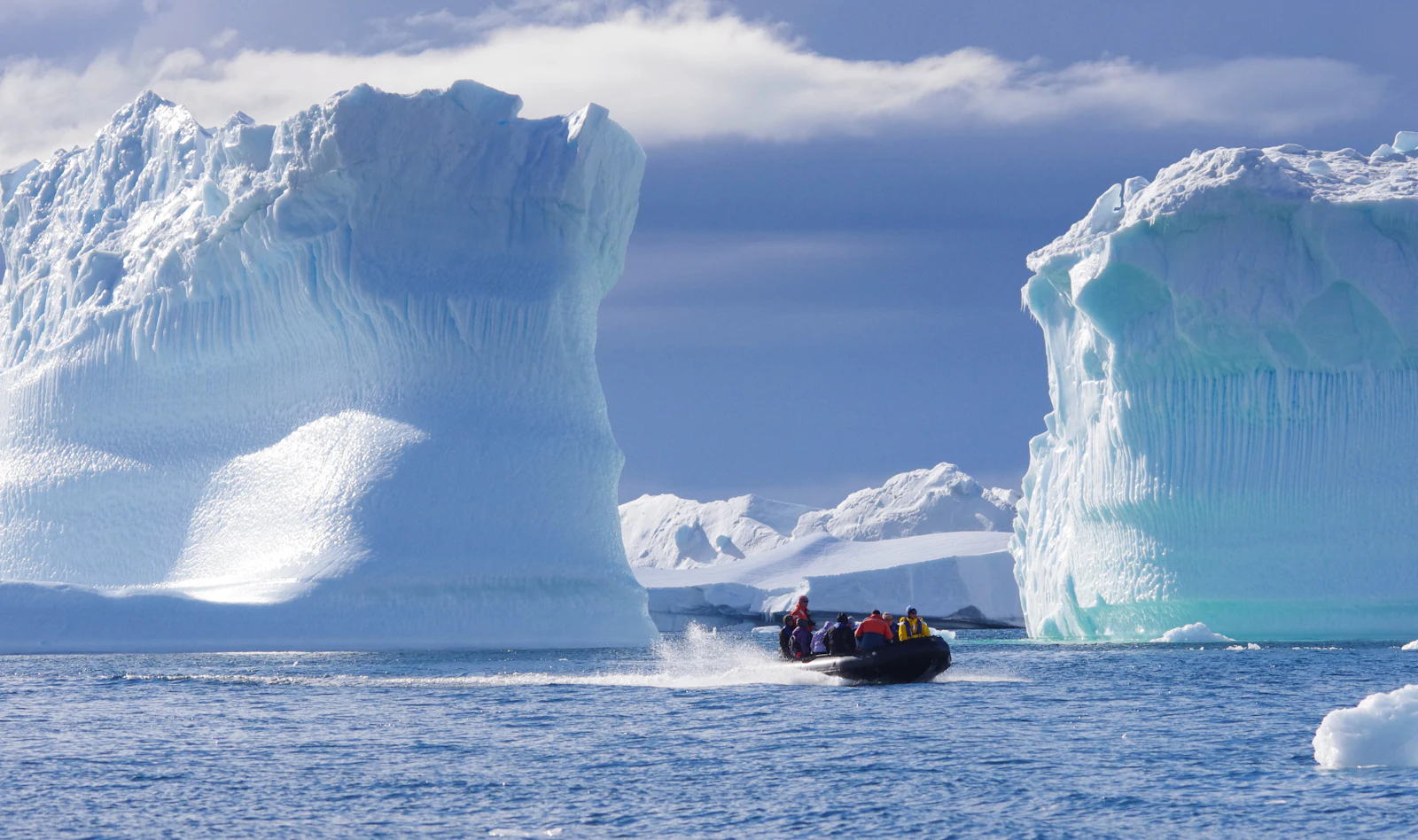
- Landings and cruising by Zodiac (inflatable boat), weather permitting.
- Flexible plans: the route changes daily with ice, weather and wildlife.
- In Antarctica, landings follow IAATO guidelines that limit how many people go ashore at once.
- A Drake Passage crossing can be rough, so pack seasickness remedies.
Tips for choosing a voyage
- Compare ship size: smaller ships can usually land more people more often.
- Check what’s included, such as parkas, boots, flights to the embarkation port and pre-cruise hotels.
- Check medical and insurance requirements: many polar voyages require evacuation cover.
- These trips often sell out well in advance, especially for popular dates.
Last updated: 13 October 2026


